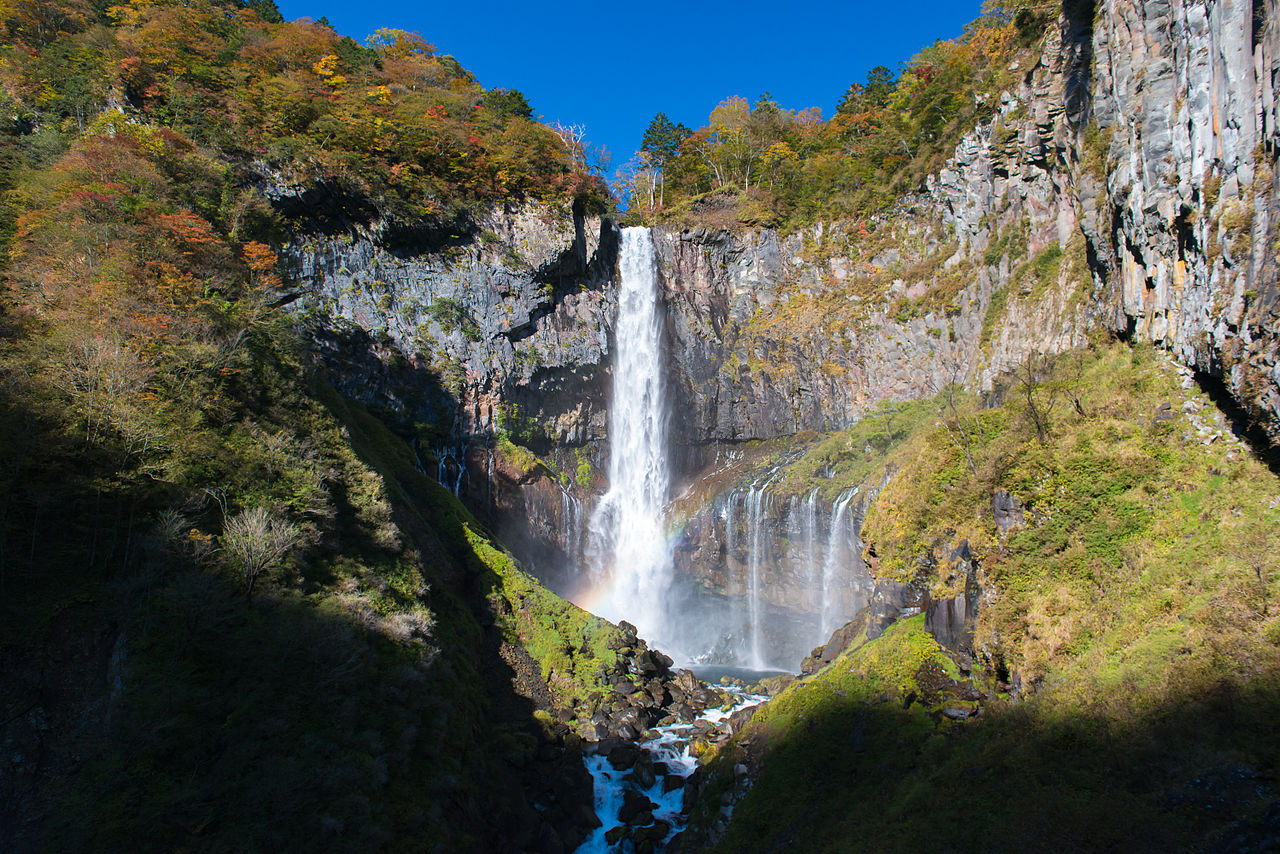
Photo: Jordy Meow / Wikimedia Commons (CC BY-SA 3.0)
栃木県
Kegon Falls
Overview
Kegon Falls plunges approximately 97 metres from the eastern rim of Lake Chuzenji into a narrow gorge in Nikko, Tochigi Prefecture, making it one of Japan's three great waterfalls alongside Nachi Falls in Wakayama and Fukuroda Falls in Ibaraki. What makes Kegon remarkable is not simply its height, but its origin: the water spilling over the cliff is the outflow of Lake Chuzenji itself, a caldera lake formed roughly 20,000 years ago when an eruption of Mount Nantai dammed the valley with volcanic debris. The waterfall is essentially a lake finding its only exit — a single vertical slit in a wall of pale volcanic tuff — and the result is a column of water that feels both inevitable and extraordinary. Visitors can appreciate the falls from two vantage points. The upper observation platform at the cliff's edge offers a wide, sweeping view of the cascade and the forested gorge below. Far more dramatic is the lower platform, reached by a paid elevator that descends through the rock face itself. From there, looking straight up, the full 97-metre column fills the sky, flanked by dripping cliffs carpeted in moss and ferns. The roar at the base is physical — you feel it as much as hear it — and even in midsummer the spray carries a pronounced chill that recalls the alpine elevation of the lake above. The falls change character with the seasons. Spring brings the highest flow, swelled by snowmelt from Lake Chuzenji's catchment area, when the thunder of the water is at its most insistent. Early summer frames the white column in luminous fresh greenery. Autumn — typically from mid-October onward in this mountain setting — is the most celebrated season, when the surrounding slopes of maple, Japanese larch, and oak ignite in crimson, gold, and orange against the white water. Winter can bring a spectacular partial freeze: the margins of the waterfall become curtains of ice and icicle formations, creating a still, monochromatic composition that draws a different kind of admirer entirely.
Best period
Autumn foliage typically peaks mid- to late October, with red maples and golden larches framing the white falls in striking contrast. A partial ice formation usually appears January to February, though its extent varies by year — check conditions in advance. Morning visits reward you with spray lit golden by low-angle sunlight.
10 〜 11 月
Access
📍 Address: Chugushi, Nikko, Tochigi
From JR Nikko Station or Tobu Nikko Station, take the Tobu Bus bound for Chuzenji Onsen (about 45 minutes) and walk roughly 5 minutes from the bus stop. By car, the approach is via the Iroha-zaka switchbacks. Expect severe congestion during autumn foliage season; the bus is strongly recommended.
Map
Related spots
Same theme

京都府
Kiyomizu-dera Temple
Best period·Autumn foliage typically peaks mid- to late November, when the temple's maple groves rival the stage itself as the main attraction. Special evening illumination events are usually held during this period and in cherry blossom season — check the official site for exact dates and admission. Arriving right at opening time is the most reliable way to beat the crowds.

京都府
Eikando Zenrinji Temple
Best period·Autumn foliage typically peaks from mid to late November, when the roughly 3,000 maples across the grounds ignite in deep red. Evening illumination events are usually held during peak season (check the official site for schedules). Weekday mornings are far less crowded than weekends; the fresh greenery of May is a serene off-season alternative.

広島県
Miyajima Momijidani Park
Best period·Autumn foliage typically peaks mid-November to early December. Sunny mornings offer the most vivid light through the maples; evening illuminations (held most years during peak season — confirm with the Miyajima Tourism Association) add a magical dimension. Weekday mornings are far quieter than weekends.

京都府
Arashiyama
Best period·Autumn foliage typically peaks mid- to late November; cherry blossoms usually appear late March to early April. Weekends during both seasons see heavy crowds throughout the day — arriving early on a weekday, ideally at opening time, makes an enormous difference. The bamboo grove is at its most atmospheric in early morning mist.

青森県
Oirase Stream
Best period·Autumn foliage typically peaks mid to late October — among the most spectacular in the Tohoku region. Summer (July–August) is popular for misty mornings and cool forest shade. Arrive at opening time or visit on weekdays to avoid the heaviest crowds.

北海道
Sounkyo Gorge
Best period·Autumn colour peaks around early-to-mid October — earlier than most of Japan. Summer (July–August) is ideal for the waterfalls and alpine hiking. The winter ice festival runs roughly January–February; check official sources for exact dates and hours.
In the same area

栃木県
Ashikaga Flower Park
Best period·Peak wisteria season falls roughly in mid-April to early May, though exact timing shifts year to year. Check the official website's bloom forecast before visiting. Weekday mornings offer a calmer experience during peak season. Winter illuminations typically run through December.

栃木県
Inogashira Park Firefly Grove
Best period·Peak season is typically mid-June to early July. Visit after sunset (around 8–9 PM) on calm, warm evenings for the best sightings. Avoid using flashlights, which disorient the fireflies. Check the official site for real-time emergence updates before heading out.

栃木県
Nikko (Irohazaka & Lake Chuzenji)
Best period·Autumn foliage typically peaks from mid-October to early November — about three to four weeks earlier than in the lowlands. Weekend traffic on Irohazaka during peak season can be severe; weekday mornings are strongly preferred. Check the latest foliage conditions on the official Nikko tourism site before heading out.

栃木県
Kinu Green Park Cosmos
Best period·Early to late October
events nearby
栃木県 · 2026

April 15, 2026 〜 May 15, 2026
Ashikaga Flower Park — Great Wisteria Festival
栃木県
The festival typically runs from mid-April to early May, though the peak bloom date shifts each year based on temperatures. The park updates its bloom forecast regularly on its official website — check before your trip, as entry fees and operating hours also vary by year.

October 10, 2026 〜 November 8, 2026
Nikko Irohazaka Autumn Colors
栃木県
Peak foliage generally falls in mid-to-late October, though timing shifts by one to two weeks depending on the year's temperatures. Check the Nikko Tourism Association's live foliage reports before your visit.

October 15, 2026 〜 November 5, 2026
Autumn Foliage at Kegon Falls
栃木県
Peak autumn foliage generally falls between mid-October and early November, running two to three weeks ahead of lower Nikko. Exact timing shifts year to year depending on temperatures, so check current color reports before visiting.